
Why I Work Beyond Wood
The why behind using stones and shells in my work with wood

I’m a woodworker who works with more than just wood. Much of my recent work incorporates non-wood natural materials such as soft stones and shells. Recently, I was asked why I use these materials in my work. To best answer that question, I’ll start with some back story.
I did not grow up working with my hands or being deeply engaged in the world of craft. I enjoyed drawing and playing with clay, but I didn’t do that in any serious capacity. My most artistic/craft related passion as a kid was growing aquatic plants for the hobby of aquascaping, which is the practice of creating beautiful underwater gardens/landscapes in an aquarium. Aquatic plants are similar to wood in a way. They come in a huge variety of colors, shapes, sizes, and textures. These qualities can be intentionally utilized to make beautiful underwater jungles and required some creativity paired with the rigorous technical aspects of horticulture and water chemistry. Over time, I stopped selecting plants for my scapes based purely on objective traits such as color, texture, and growth habit. I found myself perceiving something about the plants that was harder to describe. Different species evoked different feelings within me, even if they looked nearly identical to each other. Whether one chooses to call that personality, character, or energy, I began to believe that these plants communicated something to me beyond their plainly visible qualities. As I cultivated hundreds of species of plants, I began to notice that each species had a distinct, underlying energy it possessed and my awareness of it increased as time went on.
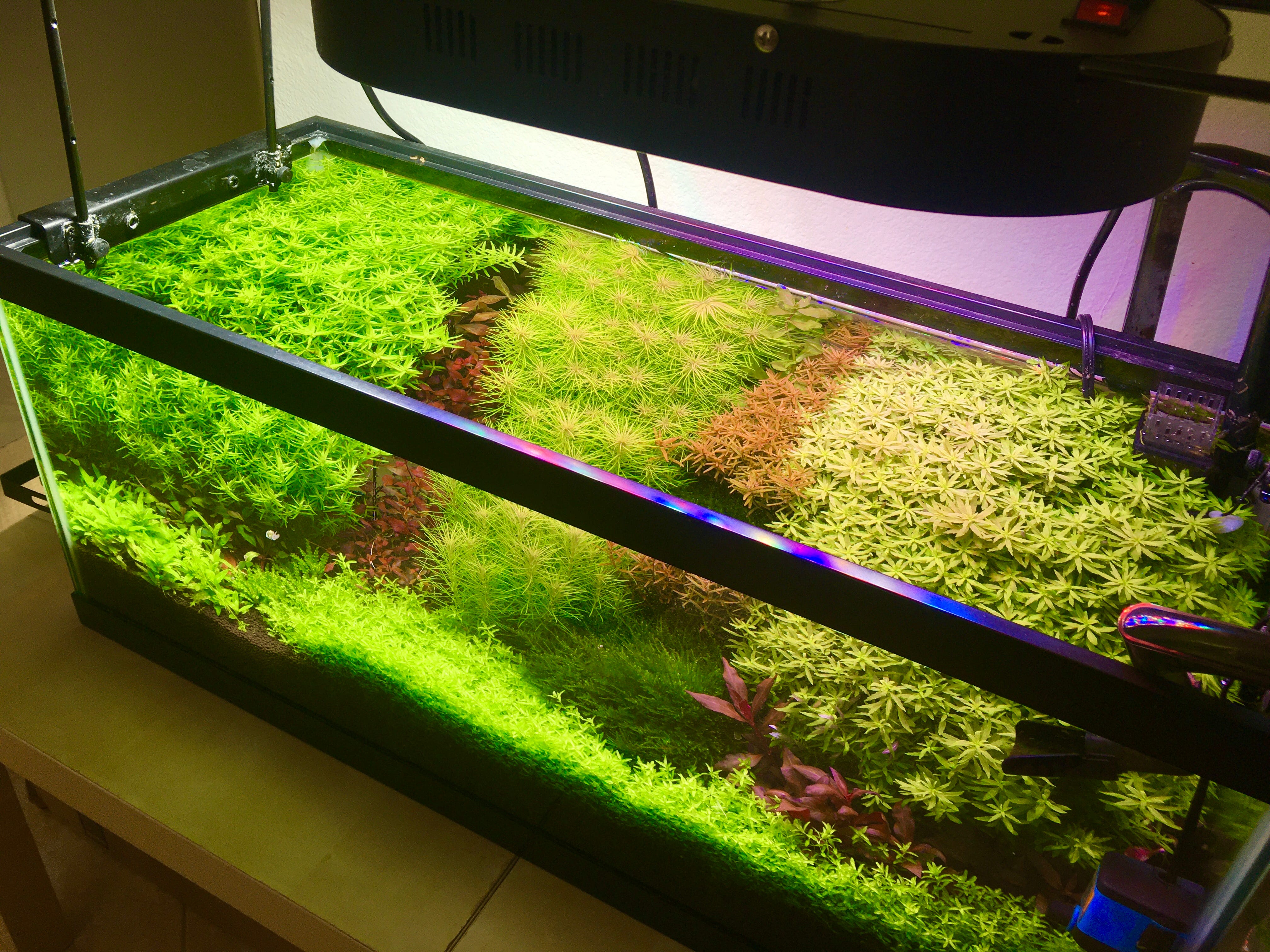
Similarly, I view wood in a way where each species has a particular personality to it. A design made from cherry will feel fundamentally different than the same design from maple. Many people might attribute that difference in “feel” to differences in color, weight, or grain graphics between cherry and maple. Yet, I’d go a step farther to say that very spirit of the tree itself impacts that feel too, even if the species is the same. Even when grain, color, and overall look of two different trees are very close, the resulting objects may feel different. I believe that matter stemming from the Earth — be it aquatic plants, wood, stone or shells — possesses a distinctive energy that is fundamentally unique and therefore irreplaceable. This belief consequently informs my material selection for certain forms where the use of wood alone cannot say everything I want the object to say.
Something I appreciate about wood is that the eye can tolerate a lot of it at once. I don’t think I’ve ever walked into a room with wood walls, flooring, ceilings, and furniture and thought “that’s too much wood”. I’d imagine my reaction would be very different if I were to walk in a room that is decked out in abalone or aqua-colored soapstone. Wood remains my primary medium because it is a refined and bold material, yet restrained and enduring. I have a deep appreciation for its timeless quality across many different species. Of course, some species may be louder or more compelling than others. For instance, bubinga is one of my favorite woods due to its striking, proud, and glowing personality. It can be perceived as loud or busy, especially if compared to something subtle and quiet like old growth vertical grain Doug fir. But ultimately, these qualities across wood become more apparent when compared to stones and shells. These materials pack a serious amount of detail, color, and texture within a very small surface area that even the most figured woods cannot compete with. My explorations in stone and shells often center these materials as moments of color, light, and contrast within a composition made primarily of wood and are often intended to serve as natural focal points within an object. The refined nature of wood allows for these other materials to shine in the spotlight while still holding its own.
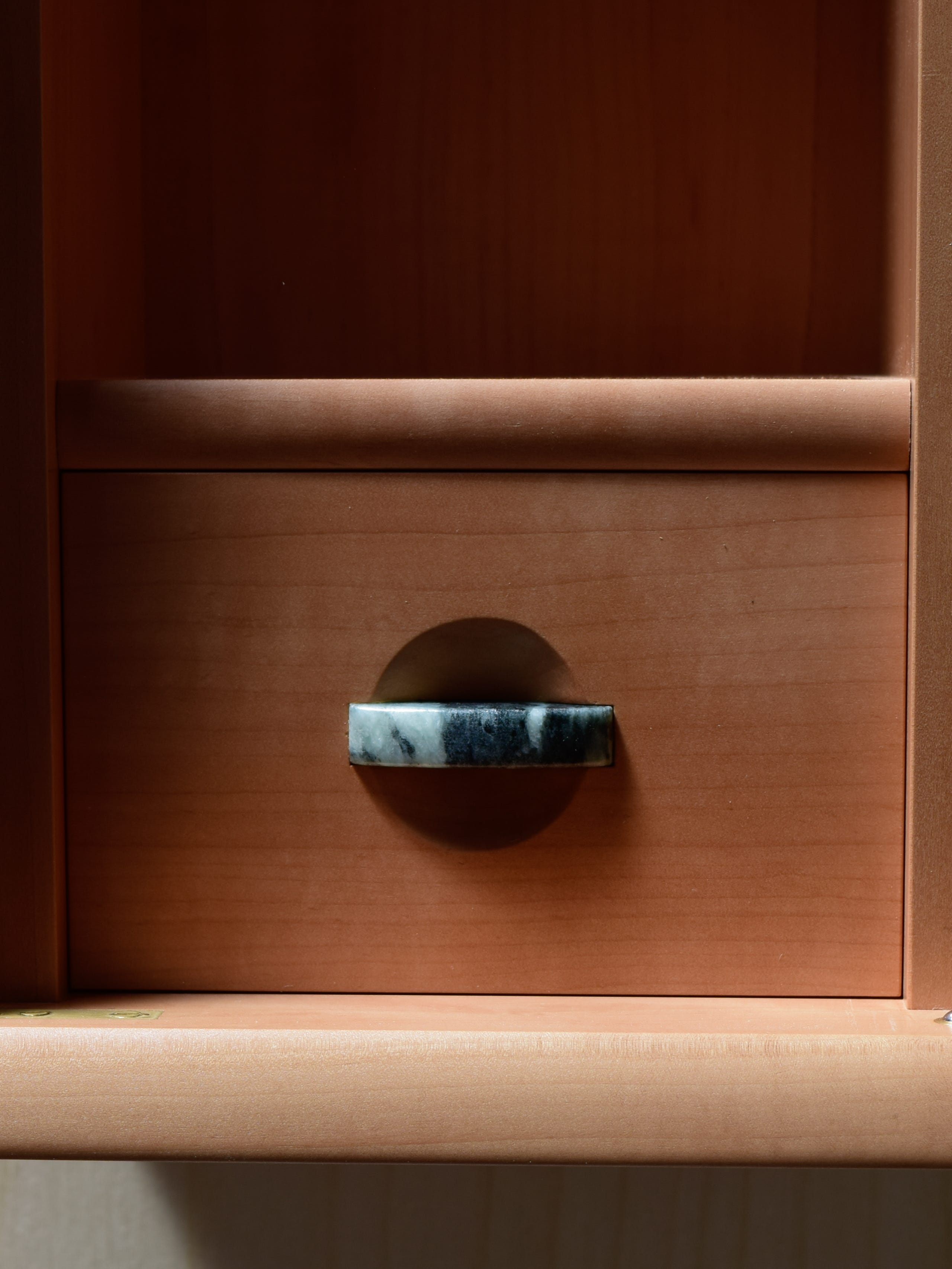
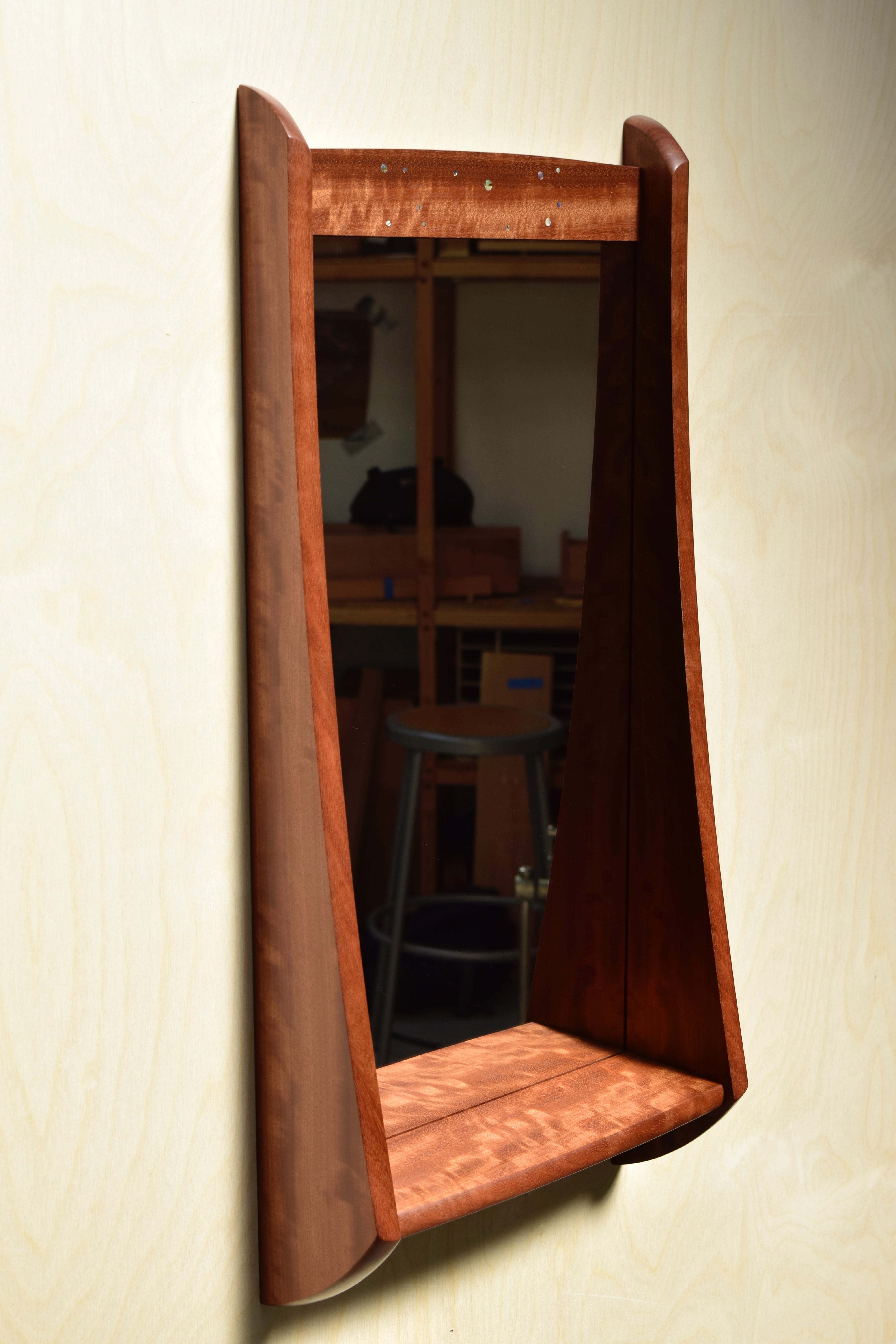
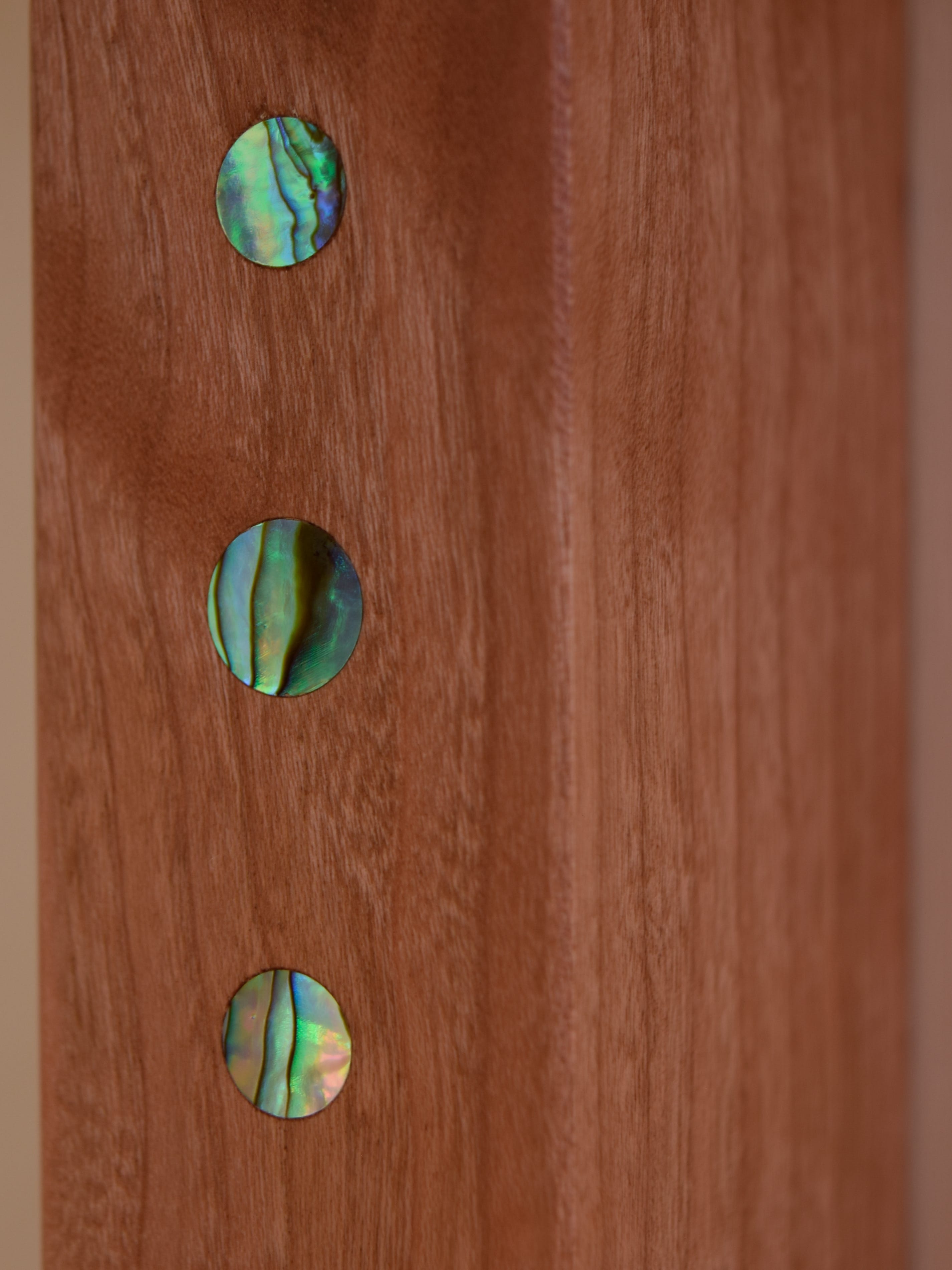
Through my initial explorations of wood with stone and shells, I’m slowly starting to understand how different materials speak to each other within a composition. I’ve found that wood tends to be an introverted material, and does not exclaim its presence even if the particular board can be a bit on the wild side. When given more attention, the wood has a lot of thoughtful things to say, especially when there is some ray flecking and natural chatoyance to the grain. But, the viewer must take the initiative first to come closer and listen. On the other hand, stones like soapstone and alabaster tend to be a bold, grounding material. Its bold coloration in the range of pinks, reds, purples, oranges, greens, and blues are unwavering. This material speaks loudly and firmly so that the viewer doesn’t have to do much to listen to it. Shell in the form of abalone is an extremely extroverted material that is lively and bright. It has an incredibly amount of color complexity packed within a tiny surface area, and its iridescent quality and play on light is something to behold. When used thoughtfully in a composition, it can cause a form to twinkle, dance, and shine. It’s an extremely playful material, but also quite loud as well. I find that a little bit of it goes a long way. When wood is combined with these various materials in a restrained manner, the loud voice of the stone or shells can be subdued by the quieter voice of the wood. At the same time, the object speaks a bit more clearly with the addition of these materials.
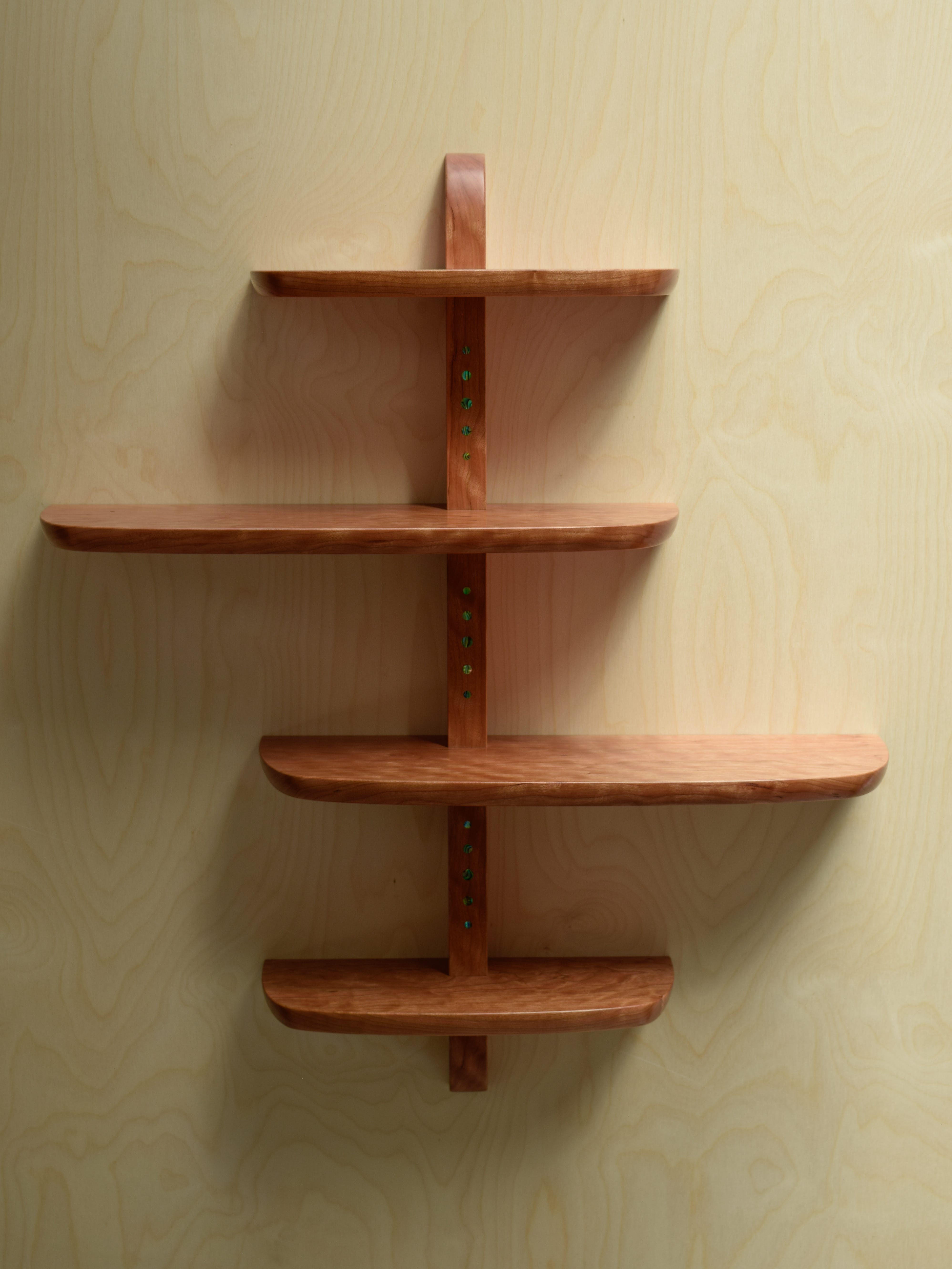
The short answer to why I use these materials in my work is this: it’s just play. I’ve found that solely wood compositions can quickly become overly serious and stern objects, especially with my preference to use tight straight grained stock. Adding in these bright, colorful, dynamic materials with a bold personality uplift a form into something that evokes awe and joy within me. I will never forget the moment that I first experimented with abalone in my piece “Abalone Shelves”. Seeing the abalone freshly leveled to the surface of wood, followed by a coat of oil blew me away. I was in total awe of the way the abalone sparkled and how it danced in the curly cherry. I remember I couldn’t stop smiling for the rest of the night whenever I’d look at it. I believe this excitement for the material I work with can be felt in the final object, and my goal is to fuse the essence of the materials and myself into the pieces I put out into the world for all to enjoy.
beautiful post - would love to read more about pieces that require the viewer "to take initiative"
Love the use of other natural materials. Beautiful work.