
Why Complex Work Isn't Complicated
The process to create complex forms and the role of rigidity vs improvisation

Introduction
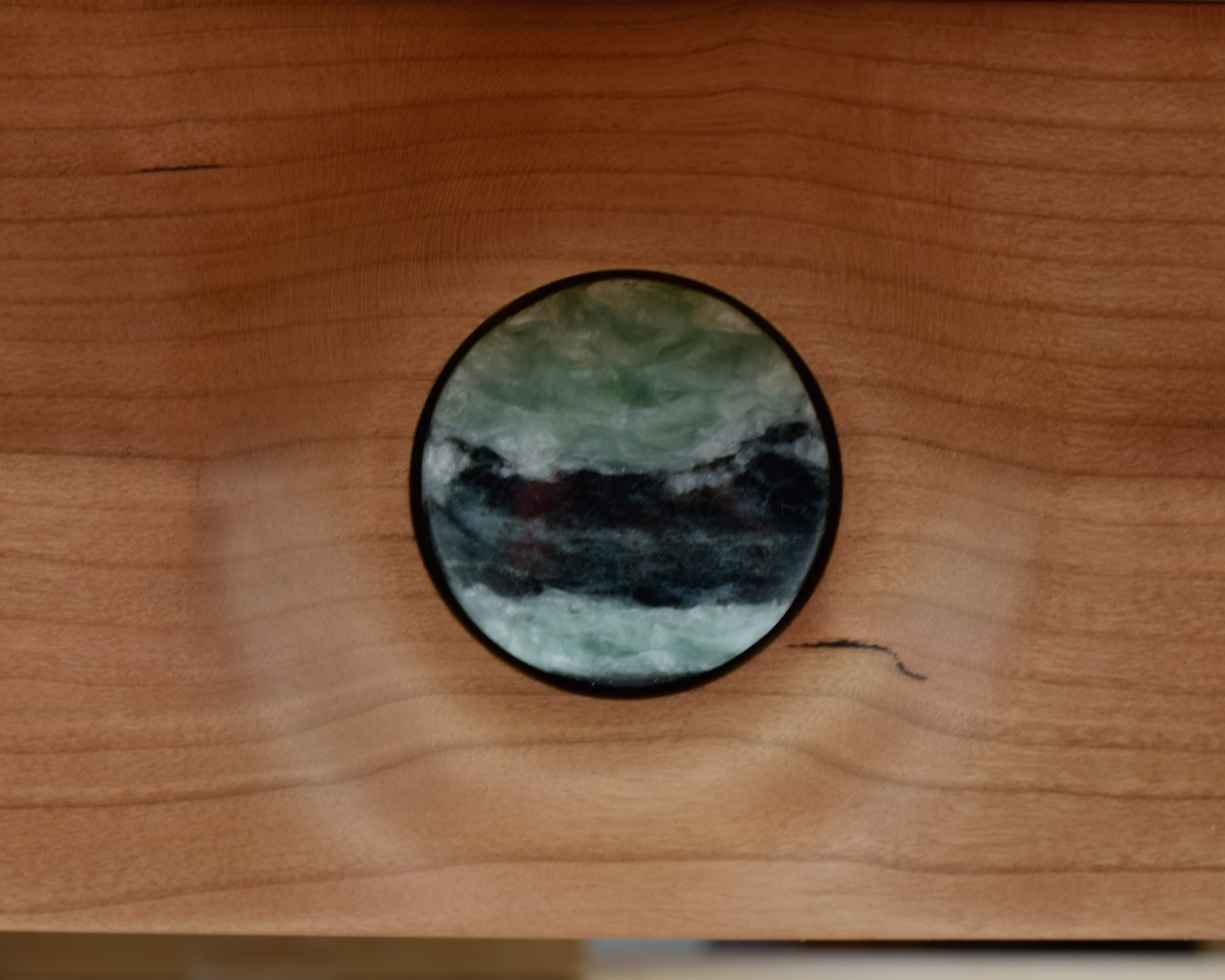
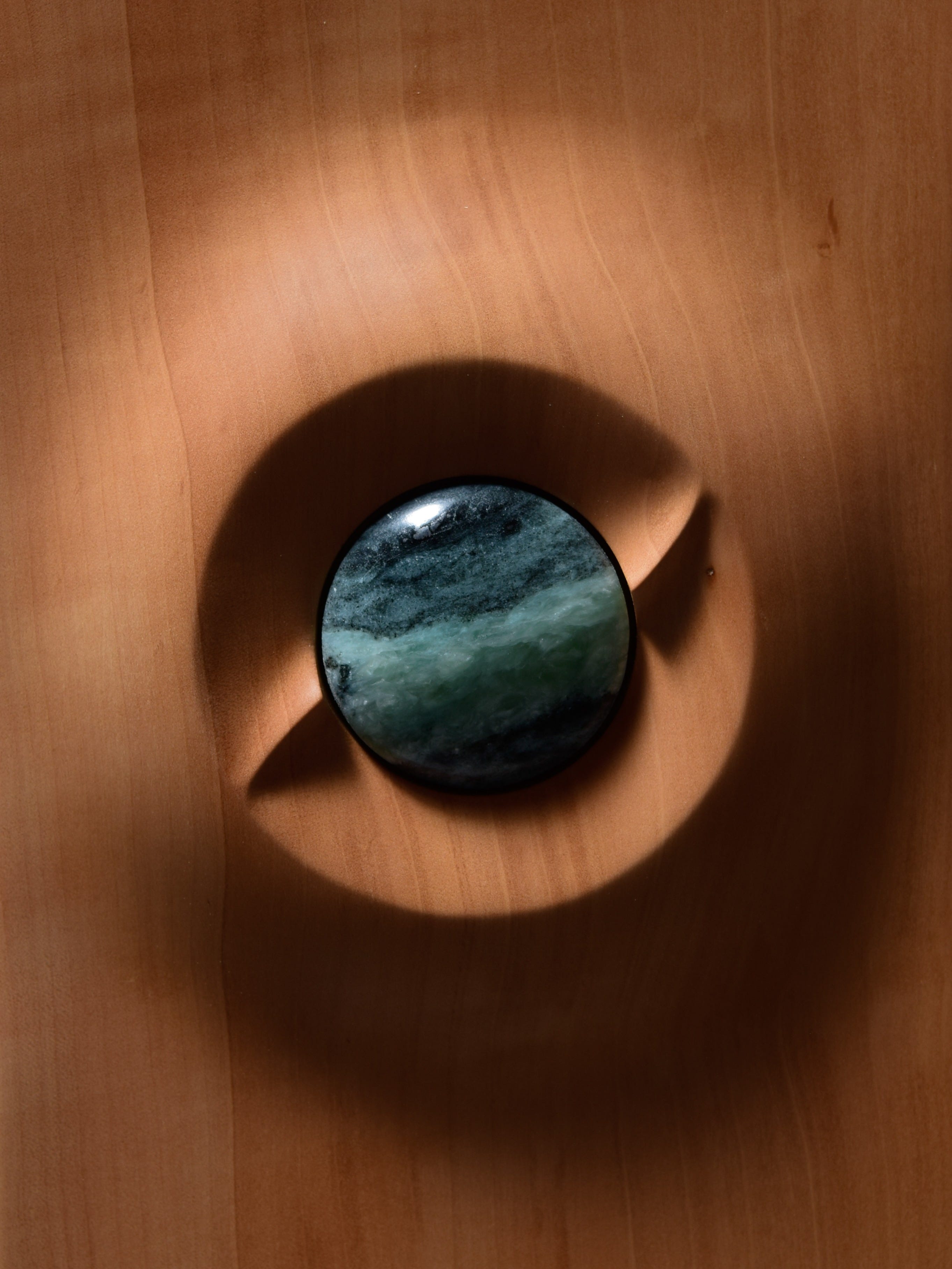
My past two pieces have included a key detail that seems to resonate with a lot of folks who engage with my content: a soapstone inlay within an integral sculptural cradle in the wood. My wall-hanging cabinet “Stillness: A Moment Within Motion” and my recent table “Concord” both contain this detail. I’ve received a lot of questions about how I created it. When people learned my process, there was a mix of “oh, that’s simpler than I thought” and “that’s an interesting way to plan a detail”. These discussions have led me to form thoughts on complexity in the process of making, and its relationship between rigidity and improvisation.
What’s the Secret to Complexity?
As a junior in college, I distinctly remember coming across the bold, imaginative works of Seth Rolland. For the first time, I saw woodworking that went well beyond basic rectilinear forms, and his work looked like nothing I had seen before on YouTube or Instagram. His Trimerous Chair especially stuck out to me, with its compound curvature and flowing lines that looked impossible, yet effortless. Though I do not know him personally, his work struck a chord within me. His creations were inspiring, but also daunting. I wanted to make complex forms like he did, but I legitimately had no idea where to even begin. At that stage of my journey, there was a major disconnect between understanding process and its relationship to complexity of form. Over the past two years, the complexity of my work has evolved significantly, and I’ve begun to understand that complexity is far simpler than I originally imagined.
When seeing complex work, I used to think that the maker was doing something entirely different than me as a beginner. Maybe the rules of layout were different for them when it came to curved components. Maybe they were using tools I had never heard of. Maybe they were doing things by hand that I couldn’t even dream of. The reality is that none of those assumptions were true. Complexity is not the result of superhuman skill or radical reinvention of the woodworking process. Rather, it emerges from the addition of well-planned and highly repeatable steps to an established process. I find that the addition of just one to three steps to a simple, established process can fundamentally transform the object to the point where it is unrecognizable.
Complexity as a Function of Steps
Let’s take the example of making a panel from multiple staves - one that is flat, curved, and compound curved. The basic process is as follows:
Mill rough lumber and break it down into staves
Cut square edges on staves for edge joining
Glue together
Mill again
Cut panel to final dimensions
This process yields a flat panel.
Mill rough lumber and break it down into staves
Cut beveled edges of staves for edge joining
Glue together
Mill again AKA shape the curves
Cut panel to final dimensions
This process yields a panel that is curved across the width, commonly used for creating coopered doors. Notice that the only addition of complexity was two steps: cutting beveled edges instead of 90-degree ones and shaping the curve of the panel.
Mill rough lumber and break it down into strips
Glue strips together in a bent laminated form to create curved staves
Mill again
Cut beveled edges of staves for edge joining
Glue together
Mill again AKA shape the curves
Cut panel to final dimensions
This process yields a panel curved across the width and length. The only addition of complexity was one more milling step and creating staves via bent lamination as opposed to solid wood. The fundamental process is the same, which is just cutting staves and gluing them together. All three results look wildly different, and surprisingly, the skill in execution to create all three is fairly similar. So it begs the question, if skill in physical execution does not play a large role in complexity, what is the driving factor? My answer is planning. The role of planning within the process of creation opens a discussion of the role of improvisation vs rigidity in relation to increasingly complex forms.
Rigidity vs. Improvisation
I find there is a common perception about artists or craftspeople that the process of creation is highly improvisational. “The design/form reveals itself through the work” is often a common theme. Though I cannot speak for the process of others, my personal practice in a reductive craft has shown me that an improvisational approach holds me back as my work becomes more technically complex. Complex forms demand a well-thought workflow where a clear order of operations becomes essential to cleanly execute an object. Improvisation of design while in the execution phase indicates the destination is constantly changing. If the destination changes, every decision made earlier will influence the ones that are yet to come, thereby making the process of execution more confusing and prone to errors.
My process often involves the creation of a fully conceived design and complete workflow before tool touches material. My tendency is to adhere to the general plan as closely as I can. This adherence is often perceived as rigidity, though I view it as commitment to the object that I’ve promised to manifest. Though I remain deeply committed to creating the object as I first envisioned it, I do remain ready to improvise as it comes to life. For me, the act of creation is like a game of telephone where the original vision is the message, and my craftsmanship is a vehicle to faithfully transmit the message to the world. Drawings, mockups, scale models, and the actual object will inherently add a bit of mistranslation or distortion of my vision as it enters a physical medium. Given wood’s variation as a natural material and my own learnings as I try new techniques for the first time, I will sometimes realize that a process for execution may need modification. I find that remaining open to tweaking the making process and even slight changes to the form while remaining faithful to the vision of the object is a good middle ground for me to exist in between unwavering rigidity and fully free-flowing improvisation. I believe that part of my growth as an artist lies in closing the gap of mistranslation as the object takes physical form. When the maker has a disciplined, thoughtful approach to making, it creates a stable foundation for properly manifesting forms of increasing complexity.
This disciplined approach to design and execution played a huge role in the sculptural soapstone details I’ve been adding to my pieces lately. Every detail is thought of beforehand, from the scale, proportion, general shape, and relative location. Little is left to improvisation. This informs my material selection, as I need to ensure the grain, thickness, and stability of the wood is appropriate for such a detail. The general process of these sculptures involves sculpture layout on an extra thick piece of wood, stopped resaw cuts on the bandsaw to reveal a lifted wood mass, further layout with nested laser cut templates, and careful sculpting with hand tools. Extra thickness is left on the wood even after sculpting so that I can flatten the piece with a hand plane after it inevitably warps from the resawing process. Without an exhaustive amount of planning, and commitment to executing said plan, these pieces would not be possible.
Conclusion
When I think back to myself three years ago as a junior in college, I think my past self would believe that I gained an unusual amount of physical skill/talent to create my current work. Though it does play a minor role, I have come to realize that physical skills alone cannot be a foundation for complexity to be built on. Complex forms should not be difficult to make because the actual physical execution is difficult. It should be hard because it requires new ways of thinking that precedes physical manifestation. It requires the maker to actually recognize all the forms the object will take on before it is fully realized, and how those forms/pieces will interface with different tools and techniques along the way. It requires recognizing problems and solving them in the planning phase before they happen in the process of making. My best work has come when the actual physical execution feels mundane because it was made so simple by my planning beforehand. As I fully internalize the value of planning, I am preparing myself for my most complex work to date in the next few months. I’m excited to see the work that the next few months will hold.
The philosophical parallels with SWE are so many, love this