
An Ode to Casework
A short rhyme and reflection on fine cabinet-making

An Ode to Casework
A whole world of possibilities to explore
With a minimum of four sides and a door
Designing a case is never a bore
But the workflow can quickly become quite a chore
Pulls, drawers, panels, and shelves
Keeps a woodworker busier than Santa’s elves
There’s so much joinery packed in a little space
Yet many of these details exist without a trace
Fingers crossed my glue-up is square
Even though it’s probably out a hair
I shoot all my parts with a plane
And chase a few thou while slowly going insane
Because just a shaving or two
Is the difference between tight and loose
Who knew that a box on a stand or a wall
Could be the most fussy thing of them all
Though as much as I lament
I cannot think of time better spent
Than working on a beautiful cabinet in the shop
Where the heart and hands work without desire to stop
Jokes aside, that pretty much comes up my relationship with cabinet-making this past year.
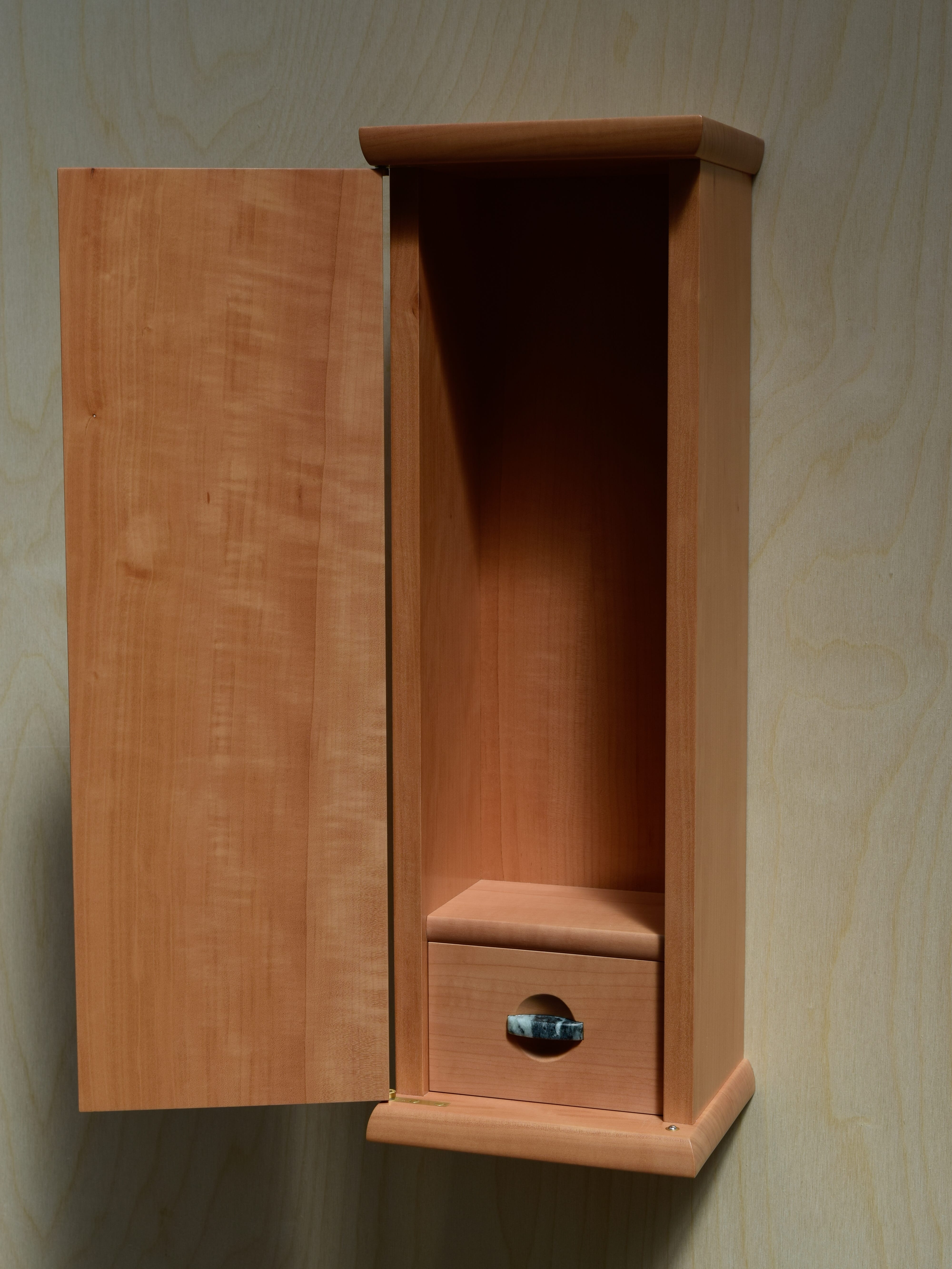
This article marks a little over a year of exploration of casework. In the past year, l’ve made dozens of objects. Yet, two thirds of my portfolio projects have been wall-hanging cabinets. It took me a while to fully realize why I am so drawn to cabinets out of everything I could make.
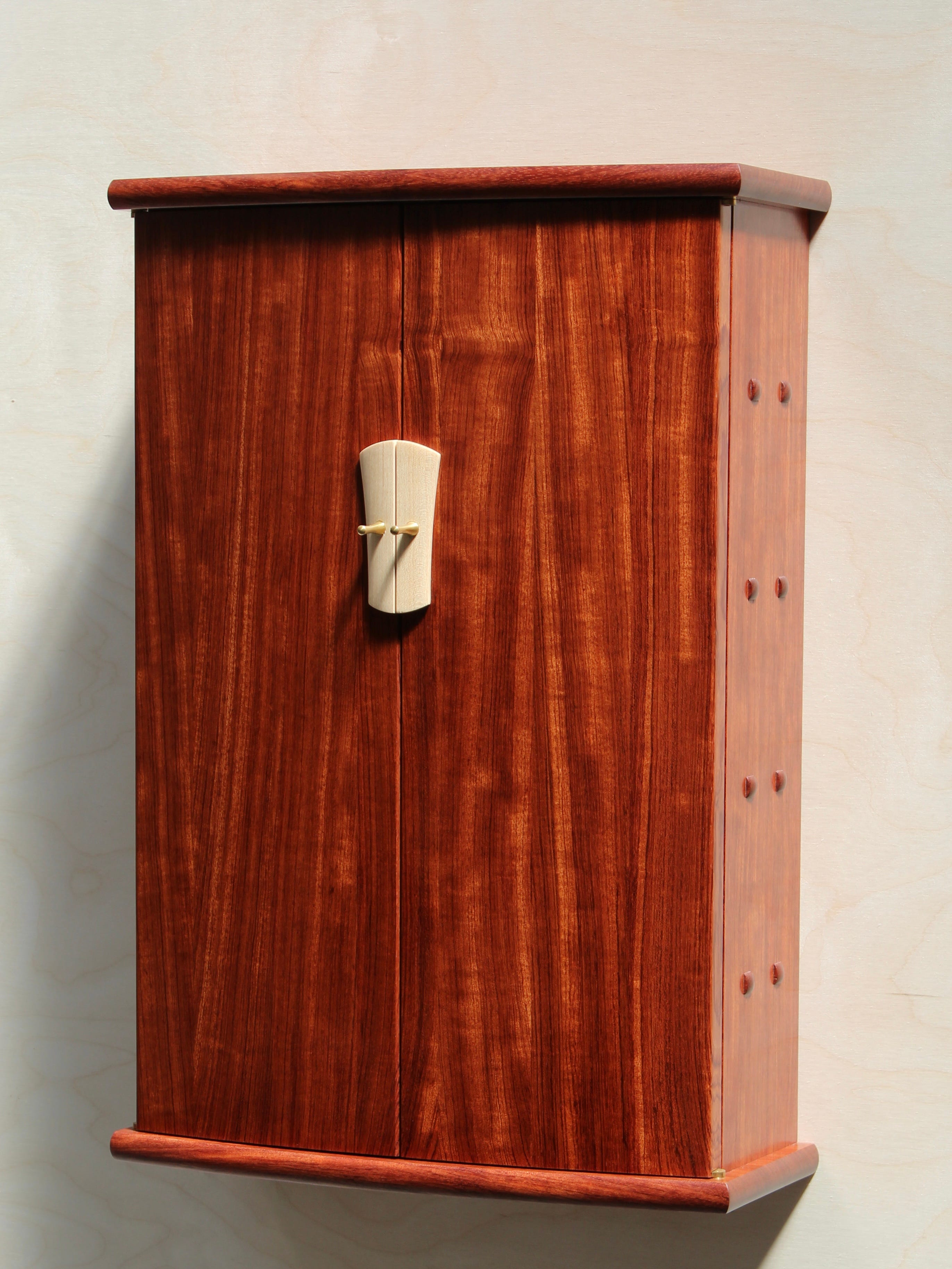
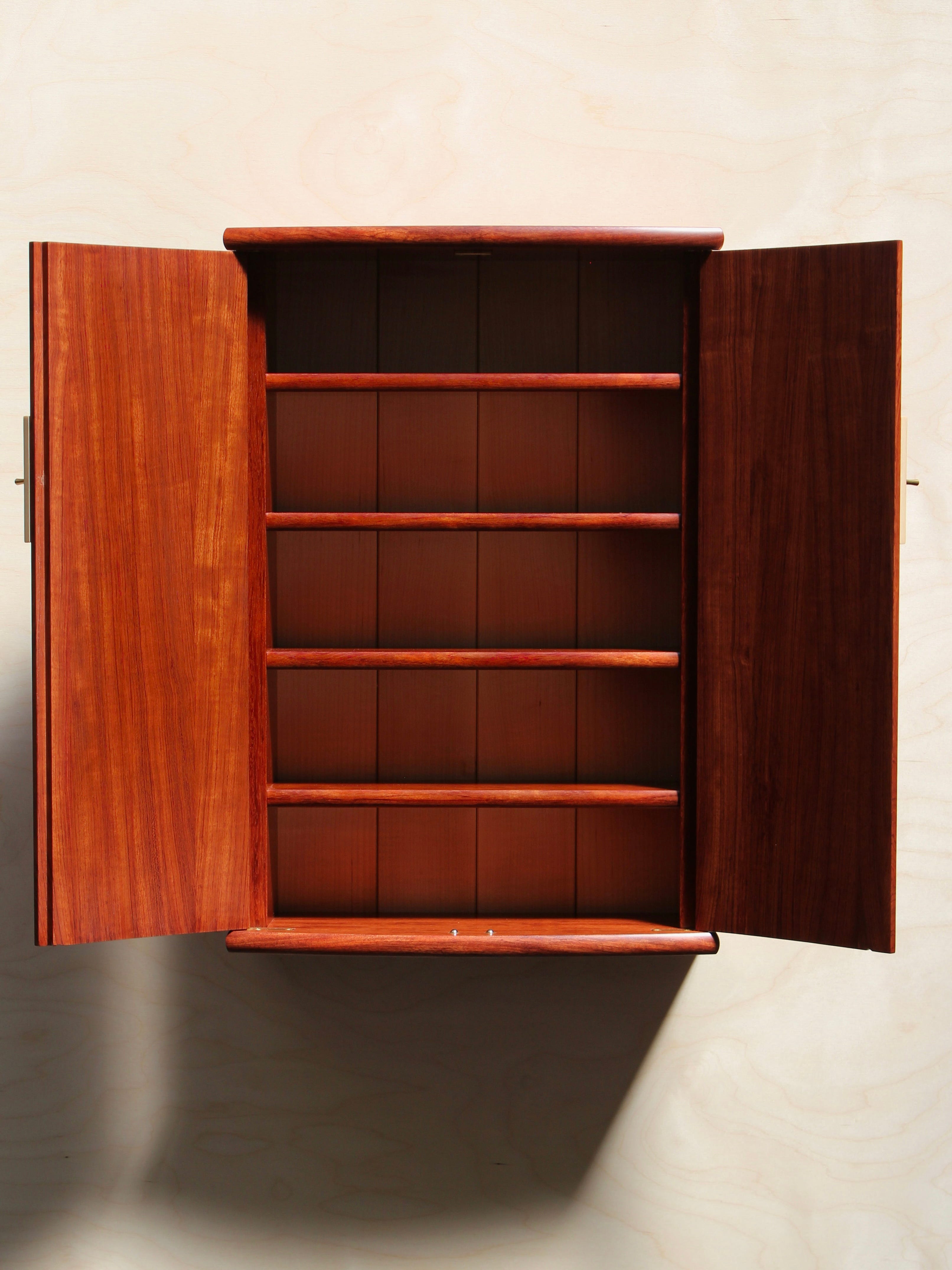
At first, I was drawn to it as a means of creating a practical objects that were physically smaller than full-blown furniture — an important detail as I’ve been living in a small studio apartment in San Francisco. But, as I started actually working on the cabinets, I realized that these objects were unlike anything that I had ever made before. They required super exacting joinery, thoughtful pre-finishing, perfect glue-ups, finicky hardware installations, and dependent parts - all of which demanded an exhaustive and thorough workflow. I had done these things before, just not all together for one project. And all of those aforementioned elements needed to be present just to make a basic box on the wall. Adding in other complexities in design such as curves, sculpture, functionality, and satisfying proportions make the process of creating casework that much more difficult.
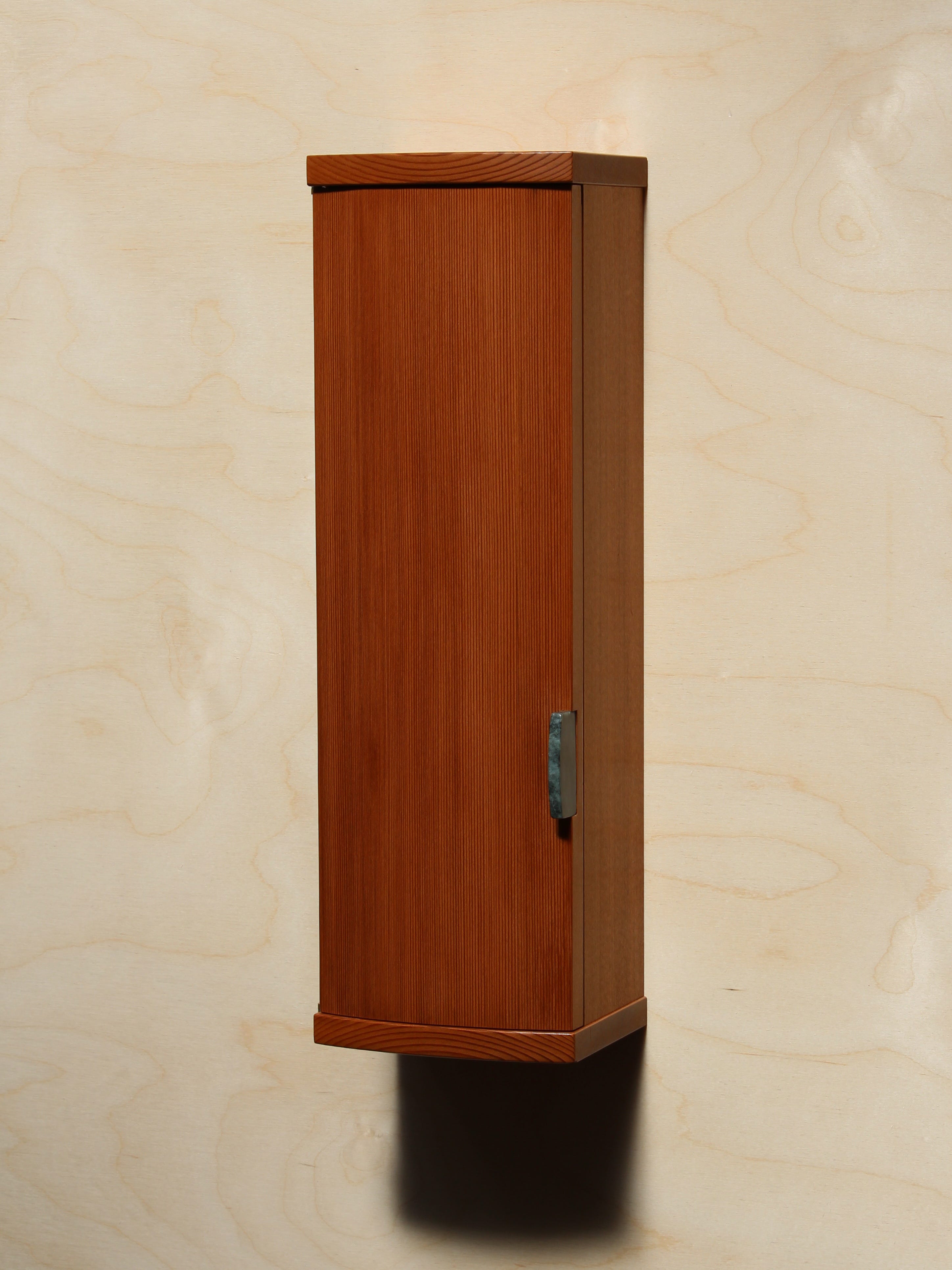
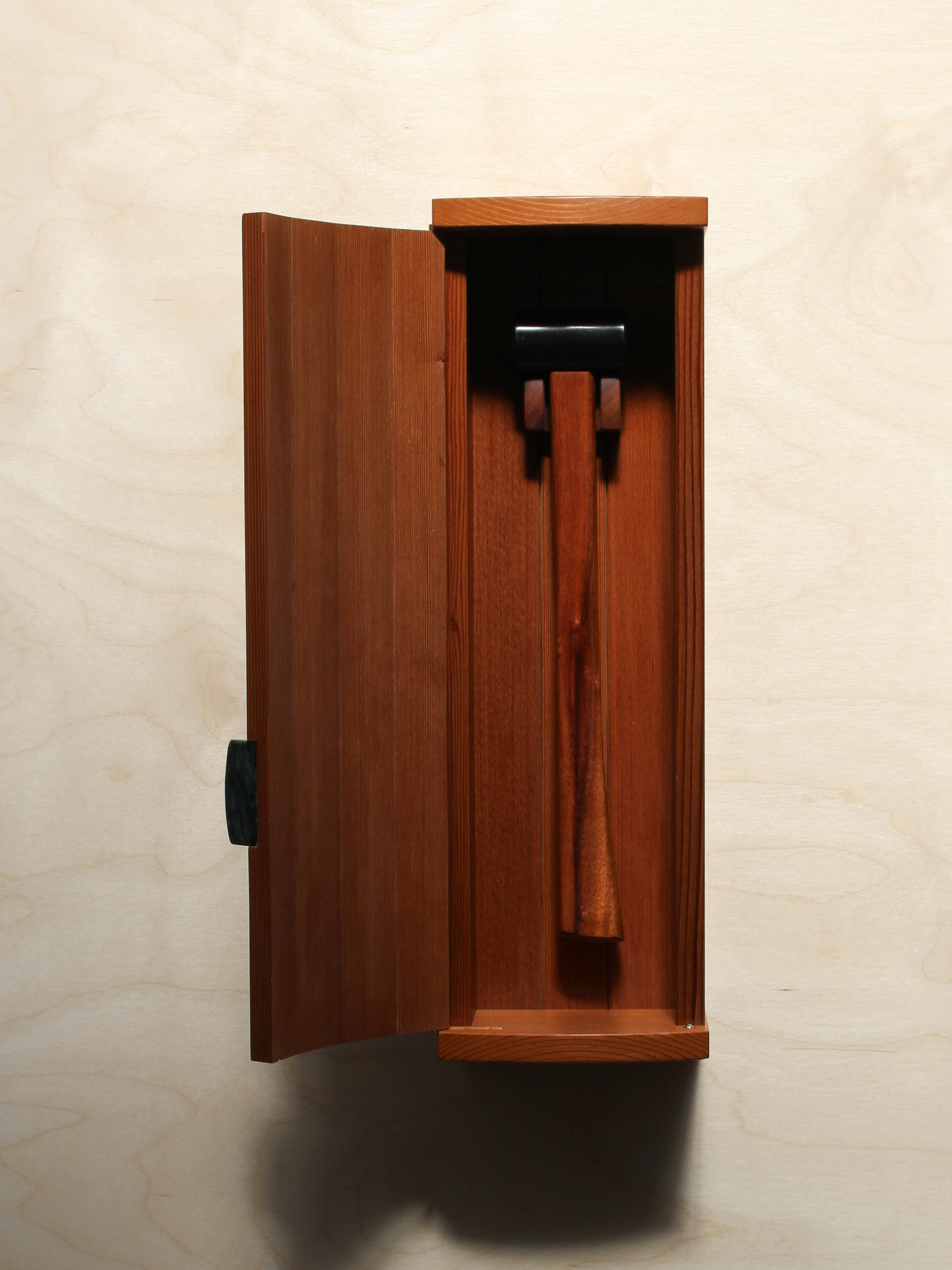
Yet, cabinets offered so much design freedom and opportunities that I hadn’t experienced before in my work. Moving components like doors and drawers were a whole new world for me, particularly in how the fingers and hands interact with something dynamic. I also felt like cabinets just offer more opportunity for experimentation with proportion, scale, and sculpture than other conventional furniture. Perhaps it’s the fact that other conventional furniture is bound by certain scales/proportions that are mandatory for utility. For example, the height of the dining table has a functional range of 4ish inches. Cabinets often don’t follow such stringent proportions because the scale and use cases are so variable. With each new element, added to the carcass, like shelves, doors, and drawers, the piece slowly has new dimensions added to it that fundamentally change the energy of the creation. Cabinets, more than any other type of furniture object, are incredibly sensitive to small changes. For instance, altering the thickness of parts by just a 1/32nd is nearly imperceptible by itself, but makes a real difference in the actual piece. This sensitivity is completely captivating to me, to know that even the tiniest of changes in the right areas can have an outsized effect.
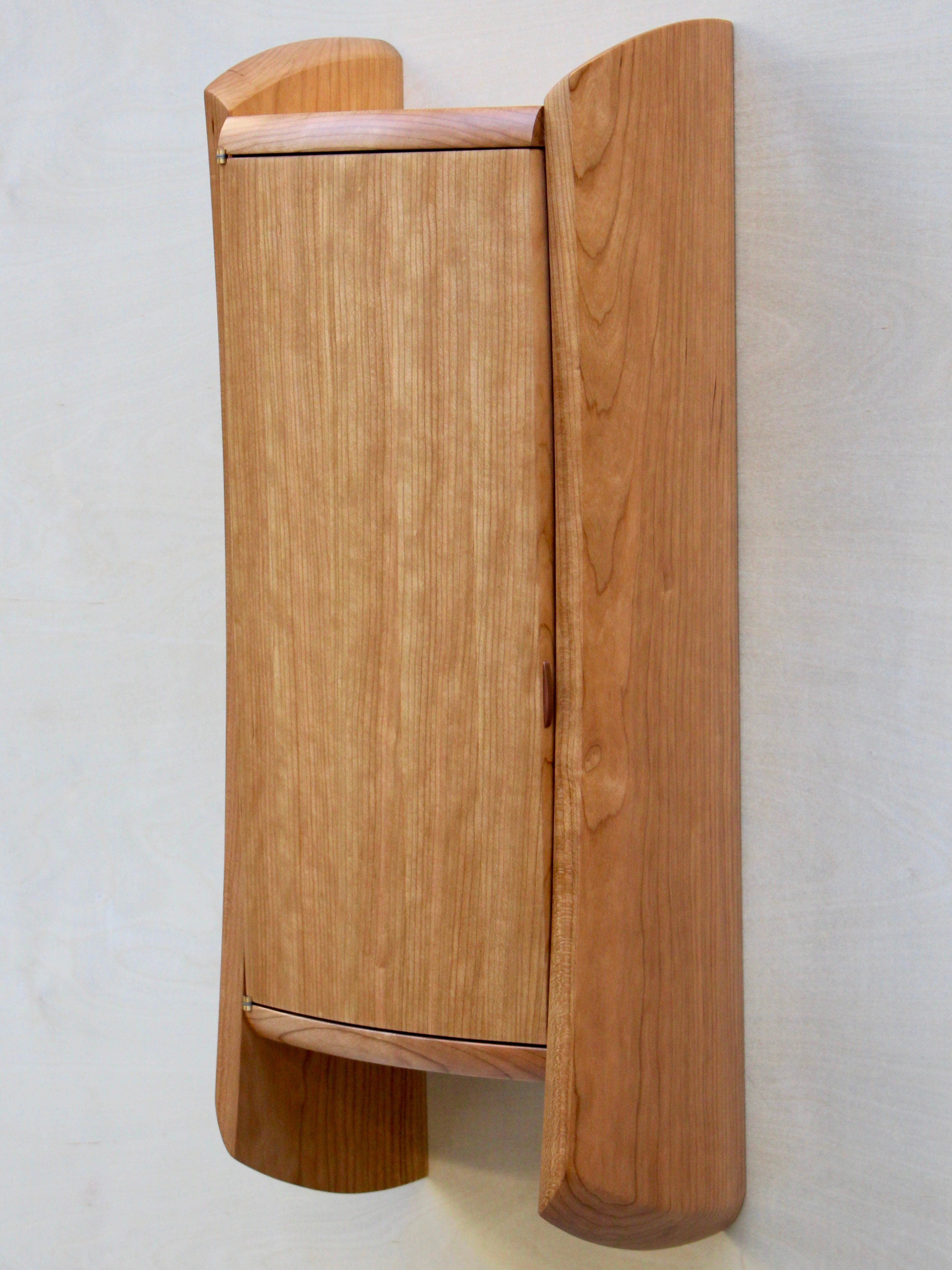
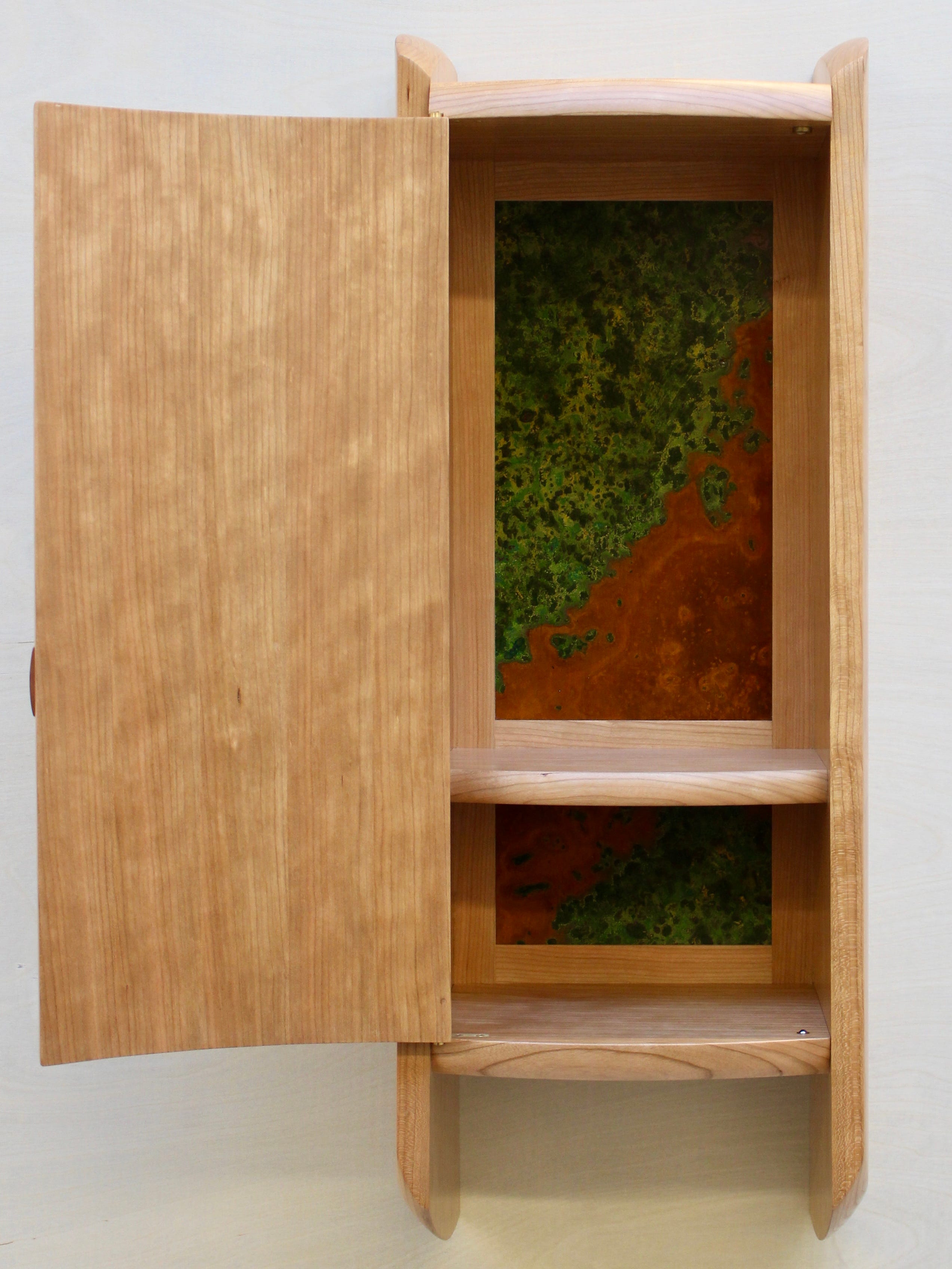
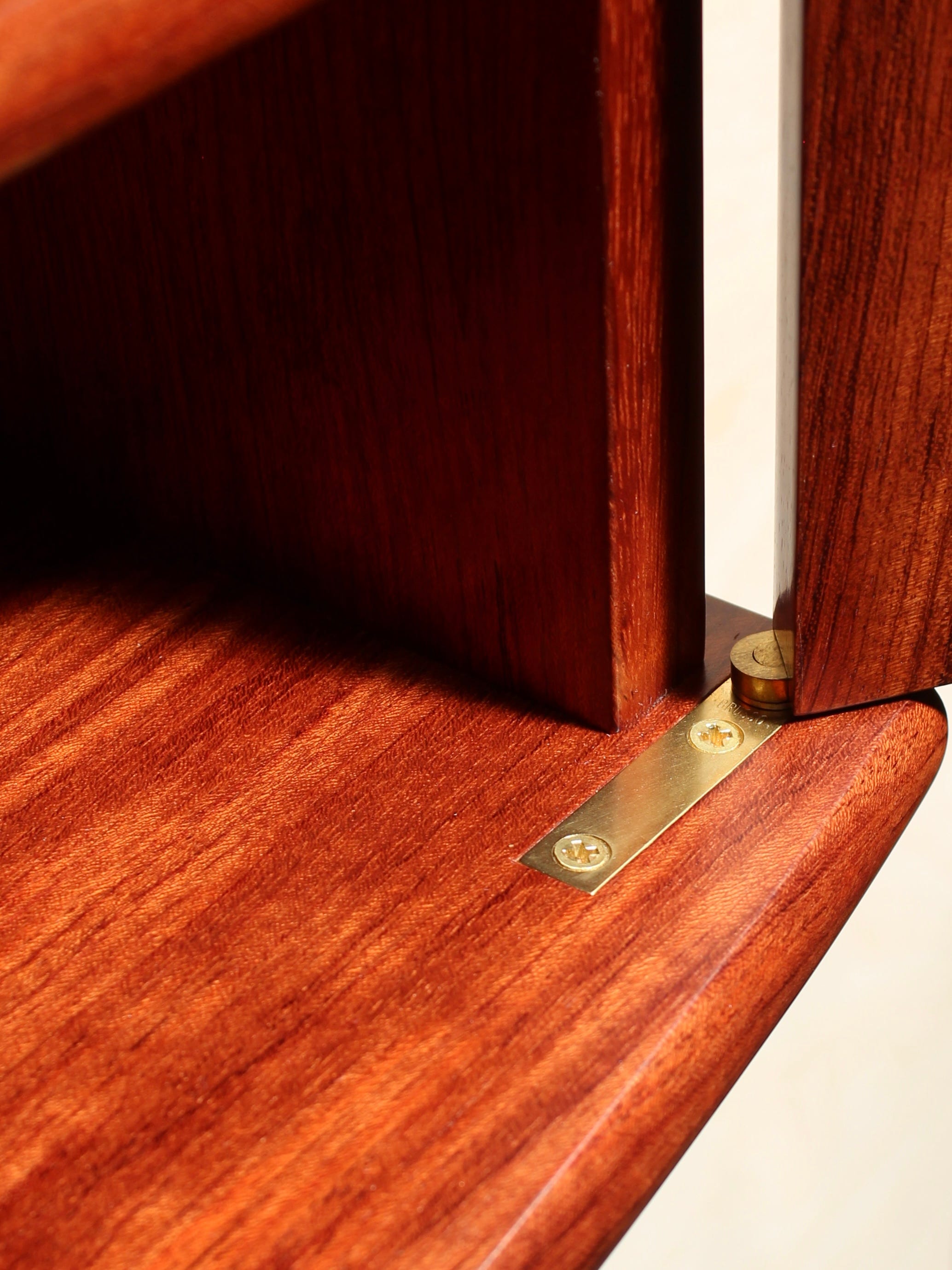
I’ve often said out loud that I don’t do woodworking because I enjoy the process of woodworking, but rather for the object that I’m able to create from it. I still stand by the fact that I don’t adore the actual process of making, but I do find certain milestones within the process of cabinet-making to be the rare moments where I can step back and admire what is being born. The first spark of magic is in the first installation of knife hinges within the case right before the glue-up. A perfectly fitted knife hinge never gets old. I love the first time the cabinet’s carcass comes together. When all sides are assembled and the back panel fits in for the first time, there’s suddenly a little microcosm created. The soft light reflected off the pre-finished parts of cabinet makes all the extra steps beforehand well worth it. There’s always excitement when an object takes form for the first time, but it’s different with casework and I can’t exactly place it. Test fitting the door for the first time is also a sight to behold. The cabinet takes a giant leap forward in its evolution of form. An open box suddenly has a cover for it that completely changes the entire look, feel, and proportion of the cabinet. It’s sometimes even a bit shocking at first, as I’ve gotten used to seeing the cabinet without its door on. But very quickly, the cabinet feels more “correct” and completely changes the way I view the piece. My final memorable moment of magic is hanging it on the wall for the first time. Everything finally makes sense, and a fully realized object is born.
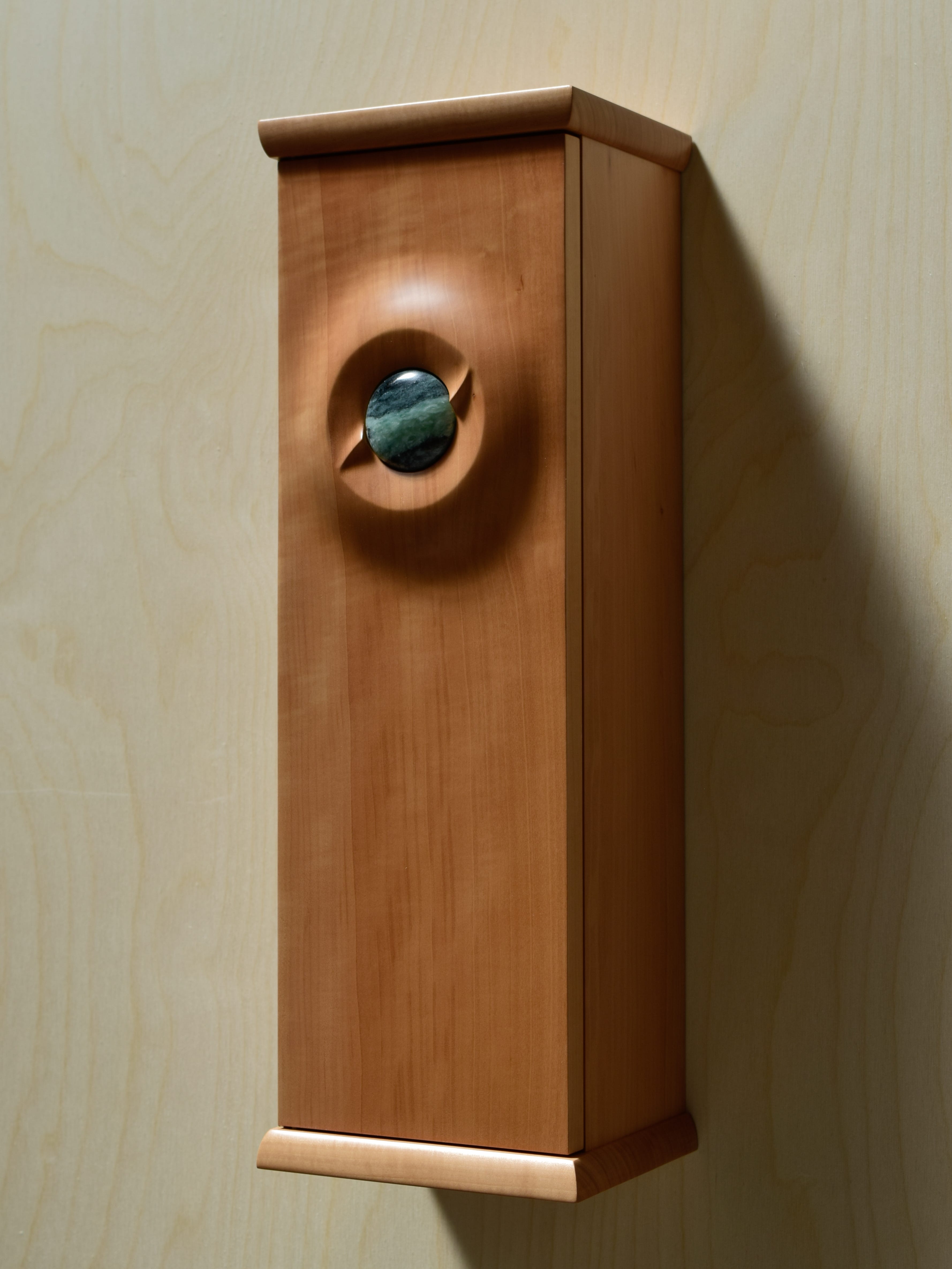
Four cabinets have defined the past year of my work. I don’t see more in my immediate future, as other more sculptural and large-scale projects are lining up in the queue, but these pieces have taught me lessons that are crucial for my future works. So, I’m writing this ode to casework and to celebrate the joys and lessons that this crazy work has brought me.
What a feast for the eyes!
Interesting story. I am also drawn to creating wall-hung cabinets. Often, for more pragmatic reasons. We have essentially run out of floor space whereas walls continue to deliver nooks and crannies where a small cabinet fits. Also, there is no need for a stand! Here is something interesting. I had one of my original wall cabinets with a single door hanging in an area of the home. People would often ask what was inside. So open the door and small, hand-picked decorative objects could be seen. One day I simply decided to remove the door and we like it more now. The interior is always visible. I often ask myself why have a door if not simply for aesthetic reasons. I like doors ( coming up with interesting graphics) but it is a good question to ponder.